Progress needs protecting
In 2025, the global HIV response faced one of its most challenging years in decades. As international funding cuts disrupted essential services, the Foundation moved quickly to protect care, support communities most at risk, and expand access to innovations that could help end AIDS.
Our annual report shows how donor support helped keep clinics open, sustain HIV services, and turn proven solutions into wider impact across the world.
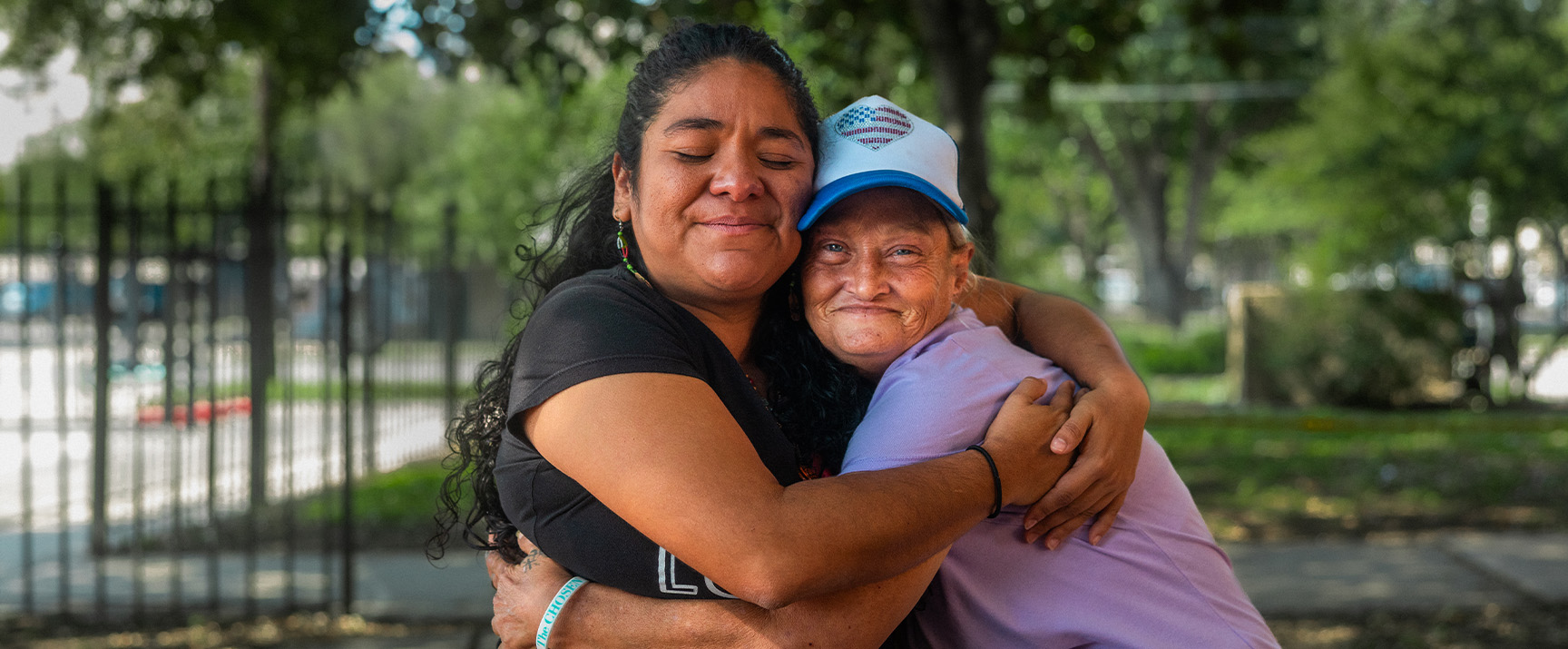
When the world looked away from AIDS, we did not.
International funding cuts threatened decades of progress against HIV. Clinics closed, prevention programmes stopped, and millions faced growing barriers to lifesaving care.
At the same time, new scientific breakthroughs, including a twice-yearly HIV prevention medication, offered real hope for ending AIDS.
The Foundation responded with urgency: protecting essential services, supporting communities, and investing in the innovations that can reach people faster, more fairly and at greater scale.

LETTER FROM ELTON, DAVID AND ANNE
For decades, the United States had been the single largest funder of the fight against HIV, accounting for 75% of international investment. When that support was withdrawn, the impact was immediate and devastating. Clinics closed their doors. Health workers were sent home. Prevention programs stopped overnight. Millions of people living with, or at risk of, HIV were left without the treatment and care that keeps them alive.
At the very same time, anti-gender and anti-rights movements were gaining ground, threatening hard-won progress for women and girls, LGBTQ+ communities and people living with HIV.
The cruelty of this moment is hard to overstate. Because just as funding collapsed, science delivered something extraordinary: twice-yearly shots that prevent HIV with remarkable effectiveness. For the first time in a generation, the end of AIDS is within reach. But a breakthrough that does not reach the people who need it is not a breakthrough at all. If global investment is not restored, modeling suggests up to three million additional HIV-related deaths could occur by 2030. We refuse to let that happen.
BOLD LEADERSHIP
- When two-thirds of partners in Africa and Asia reported disruptions because of the funding crisis, we did not wait. We launched the Rocket Response Fund to keep critical HIV services alive.
- In Uganda, LGBTQ+-friendly health centers stayed open, providing mental health services and HIV care for individuals facing stigma and violence.
- In Vietnam, emergency support protected frontline staff and laboratory testing. In Cameroon, access to HIV testing kits and condoms was restored.
- In the Philippines, hotline counsellors remained available to LGBTQ+ communities seeking guidance and protection.
- Across the Democratic Republic of the Congo, Kenya and South Africa, partners sustained critical HIV treatment and prevention services.
This is what the Elton John AIDS Foundation has always done.
We go where others won’t. We fund what others can’t. And we stand with communities others overlook.
In 2025, we reached 523,000 people with HIV services across 68 countries. We ran preexposure prophylaxis (PrEP) programs in 26 countries, approved 44 grants totaling over $18 million, and tested more than 230,000 people for HIV. And behind the headlines, we continued the patient, strategic work that makes lasting change possible: investing in advocacy, legal reform and movement building in more than 21 countries.
BELIEVING IN GREAT IDEAS EARLY
Our role is not only to respond to crisis. It is to see the future coming and help make it a reality. Finding the most promising ideas in the fight against HIV, and committing to them before the world catches on, is at the heart of what the Elton John AIDS Foundation does. In 2023, we became Zipline’s first philanthropic partner in Kenya, recognizing the potential of their drone delivery model to transform access to HIV testing, treatment and prevention. At the time, no government had made a major commitment to the model.
We helped generate the evidence. We helped build the confidence. We helped prove it could work.
In November 2025, they secured a $150 million investment from the United States Government, tripling Zipline’s network from 5,000 to 15,000 health facilities and extending its reach to an estimated 100 million people.
The same was true when we pioneered opt-out testing in two South London hospitals in 2018. Today, that model is now being scaled to 89 emergency departments across England, central to the UK Government’s new £170 million HIV Action Plan.
We did not wait for proof of concept. We helped create it.
UNLOCKING ACCESS TO PREVENTION
We are standing at a historic inflection point. Long-acting injectable PrEP has shown near complete efficacy in preventing HIV. Yet the initial rollout is projected to reach just three million people, 15% of those who need it.
A drug that exists but can’t be reached saves no one.
We are working with partners across Sub-Saharan Africa to make sure this breakthrough gets to the young women and LGBTQ+ communities who need it most, through trusted community networks, clear information, and delivery that works for people’s real lives. Everyone deserves the right information and the real ability to choose how they protect themselves from HIV. That is what we are fighting for.
Innovation without equity is meaningless, and The Rocket Fund exists to close that gap. In September, we announced its expansion to $200 million, doubling down on our commitment to lead the change we wish to see in the world: building bridges between innovation and access, breaking down stigma, and ensuring game-changing solutions reach those who need them most.
The world can end AIDS. What is missing is courage. The courage not to look away. It lives in our staff, who give so much of themselves. In our Board, who guide with integrity and purpose. In our partners, who extend our reach and deepen our impact. In our finance and grants committees, whose care and rigor help strengthen this work. And in our supporters and donors, whose belief in this work makes it possible.
This work belongs to all of you.
Thank you for standing with us. Thank you for choosing action over indifference. Thank you for giving hope where it is needed the most. Together, we can finish what we started.
Impact: what donor support made possible
Reached
523,000
people with HIV services across 68 countries.
Tested
230,692
people for HIV, with a further 57,688 self-test kits distributed.
Initiated
26,857
on pre-exposure prophylaxis (PrEP).
Connected
52,199
people with mental health services.
Rocket Response Fund
In March 2025, the Foundation launched the Rocket Response Fund to prevent interruptions to HIV services following foreign aid cuts.
Emergency funding helped keep LGBTQ+-friendly health centres open in Uganda, providing mental health services and HIV care for individuals facing stigma and violence. In Vietnam, emergency funding covered staffing and laboratory testing. In Cameroon, access to HIV testing kits and condoms was restored. In the Philippines, hotline counselors remained available to LGBTQ+ communities seeking guidance and protection. Across the Democratic Republic of the Congo, Kenya, and South Africa, our partners sustained critical HIV treatment and prevention services.
These rapid interventions protected hard-won gains and kept communities connected to essential care.
Oscar Party
On March 2, 2025, the Elton John AIDS Foundation's 33rd Annual Academy Awards® Viewing Party raised more than $8.9 million to support our mission to end AIDS.
Held at West Hollywood Park, the event welcomed more than 1,000 guests at a critical moment, as global HIV funding declines and the need for lifesaving services continues to grow.
The evening was co-hosted by Neil Patrick Harris, David Burtka and Jean Smart, and featured a spectacular performance by Chappell Roan.

$150M to scale what works
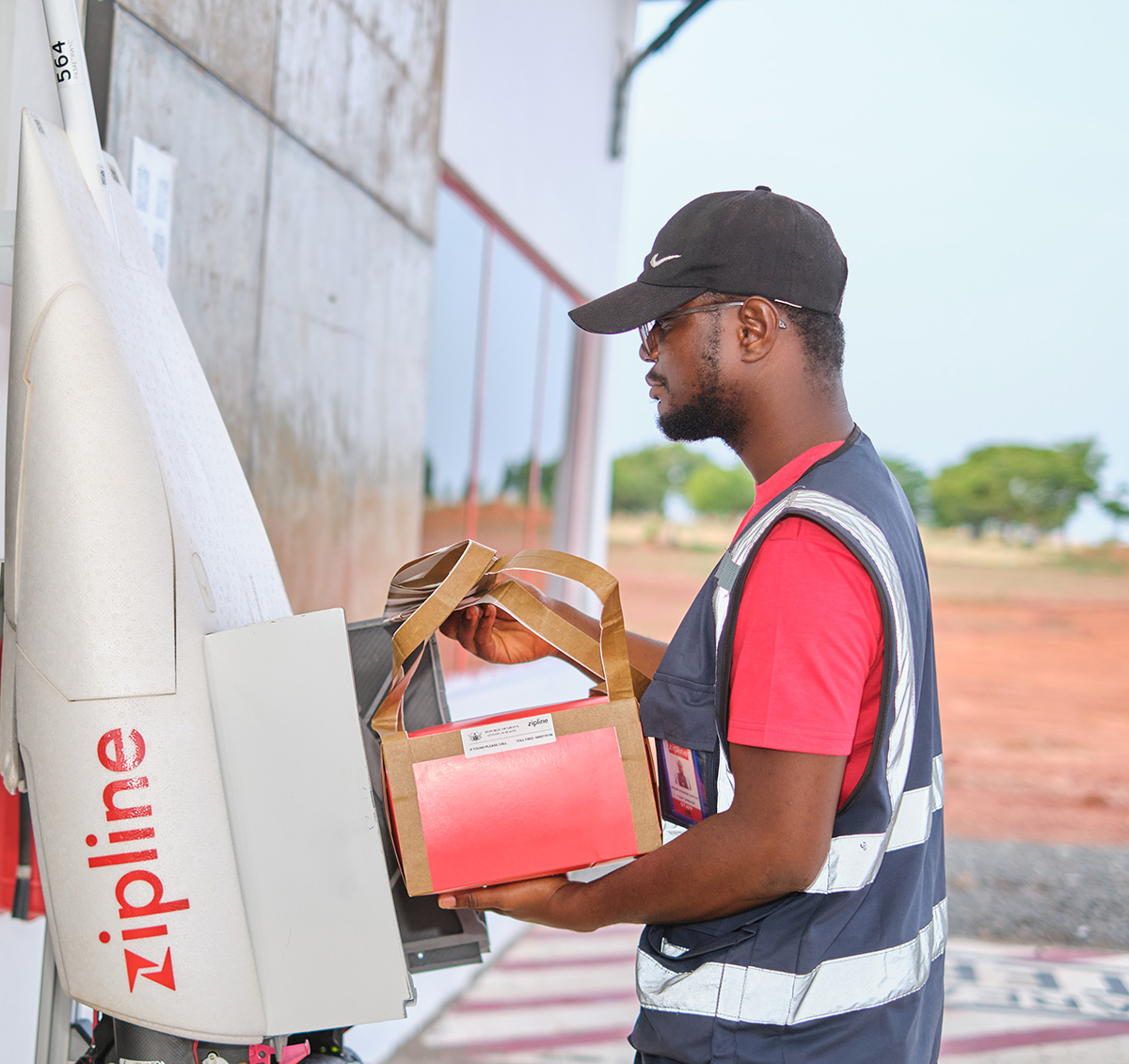
In 2023, the Foundation became Zipline’s first philanthropic partner in Kenya, recognizing the potential of their drone delivery model to transform access to HIV testing, treatment and prevention.
We helped generate the evidence. We helped build the confidence. We helped prove it could work.
In November 2025, they secured a $150 million investment from the United States Government, tripling Zipline’s network from 5,000 to 15,000 health facilities and extending its reach to an estimated 100 million people.
Opt-out testing expansion
On World AIDS Day, the UK Government announced a £170 million HIV Action Plan for England, as part of a transformative commitment to end new HIV transmissions by 2030.
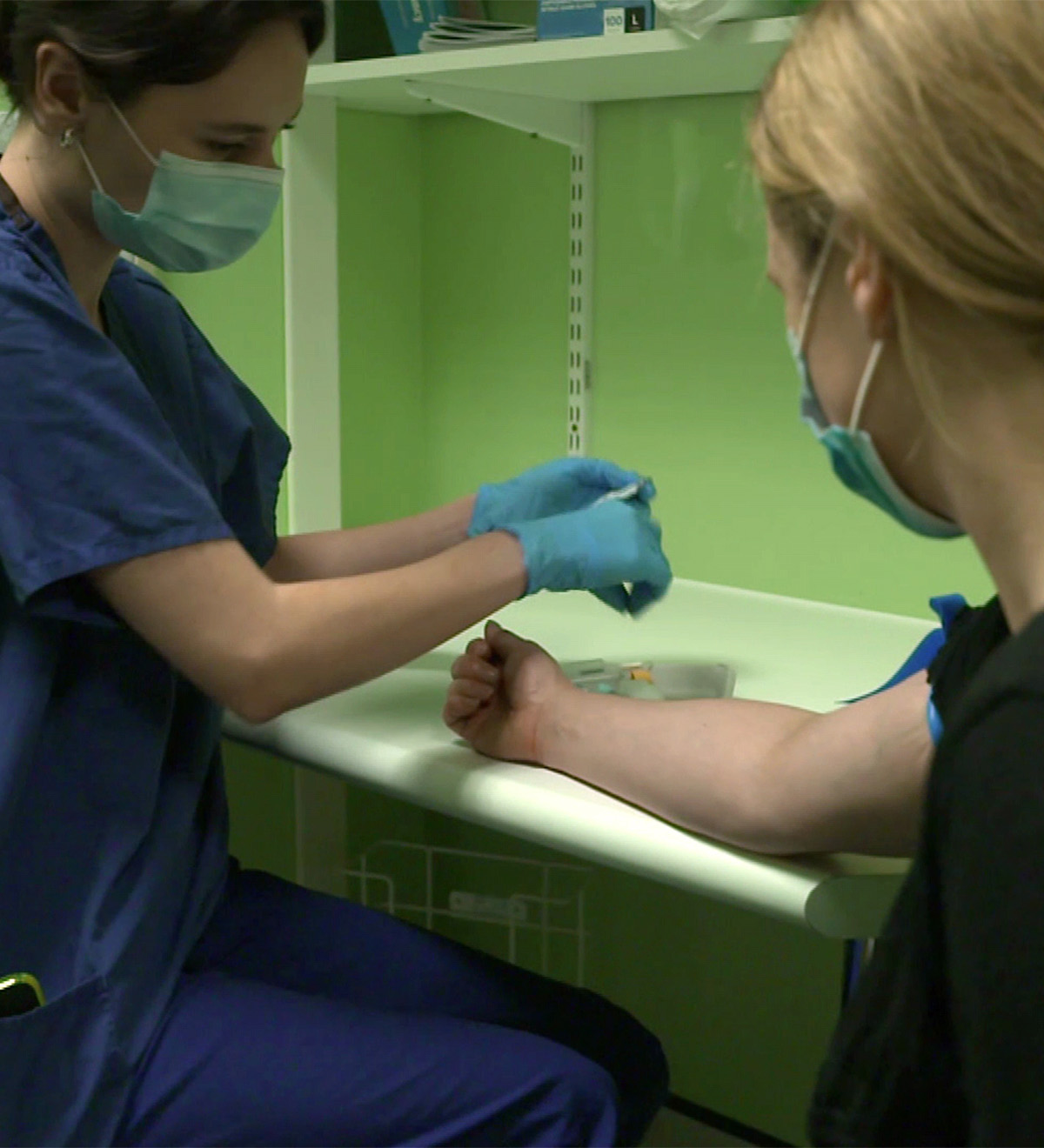
At the heart of the plan is opt-out testing in emergency departments, a model pioneered by the Foundation in 2018. Our initial pilot in two South London hospitals proved that testing could become routine, judgment-free and compassionate. The evidence catalyzed sustained government funding by 83 times, leading to national rollout.
Stories

Jessica, United States
Jessica is a resident at Newly Empowered Women (NEW), a transitional housing program run by BEAT AIDS which supports women living with HIV.
Through support from the Elton John AIDS Foundation, the University of Houston provides BEAT AIDS with training on trauma-informed care, equipping organizations to deliver compassionate and effective services.

Memory, Kenya
Born with HIV, Memory was given pills to take every night without knowing why. After her mother passed away when she was 15, she stopped taking them. A year later, during a routine check-up at school, she took an HIV test.
“I came to realize I was born with HIV, but my mum had not disclosed it to me.”

Mayur, India
Mayur is a 30-year-old PrEP counselor who worked with PrEPARED, a project supported by the Elton John AIDS Foundation, connecting LGBTQ+ people across India to HIV prevention and care. After working in retail and hospitality, Mayur chose a path rooted in supporting his peers.
“I want to do something for my community. When people say ‘Because of you, we got tested and had a good experience so we’re going to share this with our friends’, it makes me feel proud.”
Jessica, United States
Jessica is a resident at Newly Empowered Women (NEW), a transitional housing program run by BEAT AIDS which supports women living with HIV.
Through support from the Elton John AIDS Foundation, the University of Houston provides BEAT AIDS with training on trauma-informed care, equipping organizations to deliver compassionate and effective services.
Memory, Kenya
Born with HIV, Memory was given pills to take every night without knowing why. After her mother passed away when she was 15, she stopped taking them. A year later, during a routine check-up at school, she took an HIV test.
“I came to realize I was born with HIV, but my mum had not disclosed it to me.”
Mayur, India
Mayur is a 30-year-old PrEP counselor who worked with PrEPARED, a project supported by the Elton John AIDS Foundation, connecting LGBTQ+ people across India to HIV prevention and care. After working in retail and hospitality, Mayur chose a path rooted in supporting his peers.
“I want to do something for my community. When people say ‘Because of you, we got tested and had a good experience so we’re going to share this with our friends’, it makes me feel proud.”

Jessica, United States
For Jessica, NEW is more than a program. It’s a home, a sanctuary, and a community that helped her rebuild her life after addiction, incarceration, and an HIV diagnosis in 2015 which changed the course of her life.
When Jessica was diagnosed, she was scared and alone.
“It was scary because I didn’t know anything about it. I wasn’t taught about HIV or AIDS, or what steps I needed to take.”
A small act of compassion from a nurse became a turning point for Jessica, easing her fears and showing her she wasn’t alone.
Jessica began treatment immediately, and her mother’s search for support led them to NEW. But her journey to recovery wasn’t easy.
“At first, I wasn’t ready. And I left.” After spending time in prison, Jessica reached a turning point. “I was ready to finally change everything and start new. It’s like all of a sudden, it just clicks.”
When Jessica returned to NEW in May 2024, she found stability.
“This place has become a very safe place to recover. I’ve been here for a little over a year now and I’ve been able to rebuild my life.”
Through trauma-informed support, mental healthcare and community connection, Jessica found purpose: “I believe there is a purpose to my diagnosis. Now I’m able to reach other people who struggle with HIV, addiction, mental health, or prison re-entry.”

Memory, Kenya
Memory is now 18, and in her first year of college. Fear of stigma and discrimination means she keeps her status a secret.
“I used to panic every time I needed to go to the clinic. I was scared someone from college would see me there and start talking.”
This is where Kasha’s AI system stepped in. Memory’s refill dates were becoming increasingly delayed, her location had changed, and her last pharmacy pick-up was overdue. The system flagged her as high risk for falling off treatment and alerted healthcare staff. The clinic offered her a solution: discreet and confidential home delivery through Kasha. Memory is one of 58,000 people Kasha reached in 2025.
“When Kasha started delivering my medicine, it felt like I could finally breathe again. I didn’t have to choose between my health and my privacy. Now, I take my medicine on time without everyone knowing my business.”
Through our partnership, technology becomes a tool for compassion, helping more people stay on treatment and thrive.

Mayur, India
There are 2.5 million people are living with HIV in India, the second-highest number globally. LGBTQ+ communities, particularly men who have sex with men (MSM) and transgender women, often face discrimination, limiting access to HIV prevention tools. Low awareness and out-of-pocket costs create further barriers.
PrEPARED tackles these through a hybrid approach combining digital platforms with in-person outreach, offering privacy, convenience, and community support. Mayur guides people through every step of their PrEP journey; from understanding risks and getting tested to connecting with doctors who prescribe PrEP virtually.
Many who reach out are young adults, but misinformation cuts across age and education levels. Mayur supports people through difficult moments, from fear surrounding diagnosis to lasting emotional impact.
“A good counselor starts by being a good listener. I remain non-judgmental about what they share with me.”
Mayur’s work is shaped by his own experience. Coming out to his family wasn’t easy, but with time, mutual understanding grew. His personal journey is a vital part of the work he does, supporting others in navigating stigma and acceptance.
Through PrEP counselors like Mayur, PrEPARED has reached tens of thousands with stigma-free, community-led HIV prevention services, care, and support.
The world can end AIDS. What is missing is courage. The courage not to look away. This work belongs to all of you. Thank you for standing with us.
Elton JohnFINANCIALS AND PAST REPORTS
At the Elton John AIDS Foundation, we are committed to operating with transparency. We are proud to share how donor support is used to drive meaningful impact in communities around the world.
Explore our financial statements and past annual reports to see how your generosity helps power our lifesaving work to end AIDS.